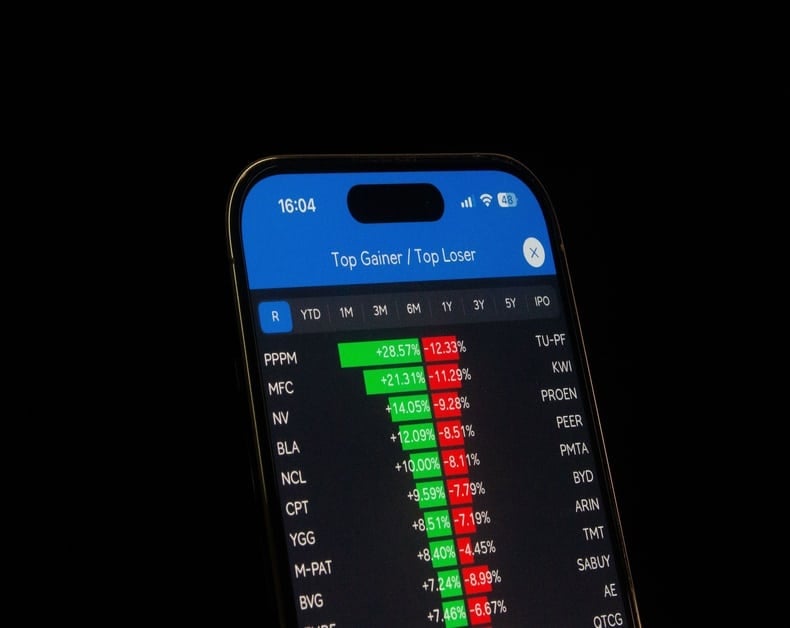
Stock Market News are attracting significant attention in today’s market. In recent stock market news, IBM has experienced a historic downturn, marking its steepest decline since 1968. The company’s earnings fell short of expectations, largely due to a shift in customer spending towards AI-related technologies. This unexpected financial result underscores the broader impact of changing technological investments on established firms. As peopl digest these developments, the implications for IBM and its competitors remain a topic of keen interest. Meanwhile, IBM earnings report remains a key focus for market participants.
IBM Faces Historic Stock Drop Amidst Earnings Disappointment
IBM’s shares took a significant tumble on Tuesday, dropping over 25%. This marks the company’s most substantial one-day decline since at least 1968. The downturn followed the tech giant’s announcement of earnings that fell short of what Wall Street expected.
Earnings Below Expectations
Analysts had predicted IBM would deliver an adjusted earnings per share (EPS) of $3.02 with a revenue of $17.86 billion. However, the company reported an adjusted EPS of $2.93 and revenue amounting to $17.2 billion. CEO Arvind Krishna explained that while a minor decline in the z17 mainframe business was anticipated, the actual outcomes were more severe. The results were partly due to a global memory shortage and a shift in client spending towards AI servers and memory.
Impact of Shifting Market Dynamics
In June, many clients adjusted their capital expenditure towards servers, storage, and memory, as they anticipated price hikes. This reallocation was a response to supply constraints and the rising focus on AI adoption. Krishna noted that this shift altered buying patterns more than IBM had expected.
Stock Market News: Broader Industry Trends
IBM’s stock, which had been down 4.8% since the start of the year, now finds itself down by 26%. This is part of a broader trend affecting major tech companies. Oracle’s shares have decreased by 33%, Microsoft’s by 20%, and Accenture has seen a steep decline of 50%.
Expert Analysis
Ashish Nadkarni from IDC remarked on Wall Street’s reaction, suggesting it may have been stronger than necessary but acknowledged the significance of Krishna’s remarks. He pointed out that IBM’s challenges reflect a general shift in enterprise budget strategies to accommodate the rapid pace of AI adoption.
Upcoming Developments and stock market news
IBM plans to hold its quarterly earnings call on July 22, which might shed more light on its current position and future strategies. For those tracking market news, it will be an opportunity to gain additional insights into the company’s direction.
For more insights into technology and how it impacts the stock market, you can check out the latest updates.
This content is adapted from Yahoo Finance. The IBM earnings report market is responding.
In conclusion, IBM’s recent earnings report has certainly caught the attention of those following market news closely. Despite the technological giant’s longstanding reputation, its latest figures have left some analysts puzzled. The shortfall in earnings can be attributed to a variety of factors, including the shifting landscape of AI adoption. As companies worldwide continue to integrate AI into their operations, IBM’s financials have felt the impact. Furthermore, the global memory shortage has added another layer of complexity to the situation, affecting IBM’s ability to meet certain demands.
While IBM’s stock performance has been under the microscope recently, it’s evident that the company is navigating a challenging period. These developments highlight the dynamic nature of the tech industry and the need for adaptability amidst evolving trends. As things stand, IBM remains a topic of discussion on many a stock watchlist, with people keenly observing how the company will respond to these challenges in the future.
What caused IBM’s stock to drop significantly?
IBM’s shares fell over 25% due to the company’s earnings report that fell short of Wall Street’s expectations. The reported adjusted EPS was $2.93, below the anticipated $3.02, and revenue was $17.2 billion instead of the expected $17.86 billion. This was attributed to a shift in customer spending towards AI servers and memory, exacerbated by a global memory shortage. For more details, you can read the full article.
How did IBM’s earnings compare to analyst predictions?
Analysts had forecasted IBM’s adjusted earnings per share to be $3.02 with a revenue of $17.86 billion. However, IBM reported an adjusted EPS of $2.93 and revenue of $17.2 billion, missing expectations and leading to a significant drop in their stock price. You can find more information in the original article.
What did IBM’s CEO say about the earnings shortfall?
IBM CEO Arvind Krishna noted that the company’s earnings were affected by a shift in client capital expenditures towards AI-related purchases, amidst a global memory shortage. He acknowledged that while a minor decline in their mainframe business was expected, the actual impact was more severe due to these market dynamics. Further insights are available in the article.
How does IBM’s stock performance compare to its competitors?
IBM’s stock, which had been down 4.8% since the start of the year, is now down by 26%. In comparison, Oracle’s shares have decreased by 33%, Microsoft’s by 20%, and Accenture has seen a steep decline of 50%. This trend reflects broader challenges in the tech industry as companies navigate shifting market dynamics. Learn more about the market news here.
What insights did industry experts provide about IBM’s situation?
IDC’s Ashish Nadkarni commented that while Wall Street’s reaction might have been stronger than necessary, it’s important not to dismiss the significance of IBM CEO Arvind Krishna’s remarks. He emphasised that IBM is part of a broader trend of strategic budget reallocation towards AI adoption. More insights from Nadkarni can be found here.
In other news: REIT returns outpace gains in broader markets for 2nd straight week on strong earnings